
In an earlier post, Why I Still Return to CDs, Vinyl and the Imperfect Sound of Music, I wrote about why I keep returning to physical music. Streaming is wonderfully convenient, of course, but CDs and vinyl offer something else. They carry traces of use. They can age. They can become associated with particular rooms, particular people and particular periods of your life. And sometimes even their defects become part of the music.
I was reminded of that recently by an album I loved when I was much, much younger: Hero and Heroine by the English band The Strawbs. At the time, I played that record a lot. The opening song especially was exactly to my taste. I knew it well, probably far better than I realised. But there was something unusual about my copy of the record. Somewhere near the beginning of that first song, there was a small piece of damage in the groove. Because of that little scratch the needle always made a little jump.
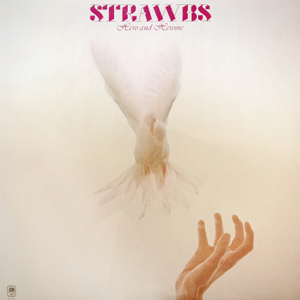
At least, that is how I remember it. It was not dramatic. The record did not get stuck in an endless loop, nor did the stylus suddenly skate across half the song. It was just a tiny interruption. A fraction of a second in which something was missing or shifted. And after hearing it often enough, that little jump stopped being damage. It became part of the song.
I did not consciously think about it that way. I never sat there analysing the timing of the skip or wondering exactly which note disappeared. It simply became embedded in my memory of the music. The song, as far as I was concerned, contained that tiny stumble.
The version in your head
Years passed. Many years, in fact. At some point I more or less forgot about The Strawbs and Hero and Heroine. Other music appeared, formats changed, CDs replaced vinyl for everyday listening and eventually streaming made almost everything instantly available.
Then, many years later, I rediscovered The Strawbs. I still remember exactly where I was: in a fashion store, waiting for my two daughters to finally decide which clothes they were going to buy. I was listening to music on Spotify when, all of a sudden, the algorithm mysteriously decided to recommend The Strawbs.
Finding the band and the album again felt like finding a small piece of my own past. I was genuinely eager to hear it. There is something fascinating about returning to music you loved when you were young. You are not only listening to the recording. You are also listening for yourself.
The recording Spotify played for me sounded fine. Better than fine, probably. The digital version was clean. There was no surface noise, no worn groove and certainly no damaged section of vinyl.
But there was also no little jump.
And that was the problem. Because the correct version of the song didn’t sound right.
When an imperfection becomes information
It is a strange thing when you think about it. From a purely technical perspective, the modern version was obviously superior. It reproduced the recording as it was intended to be heard. Nothing was missing. Nothing had been damaged. The playback mechanism was not introducing an error. Yet my brain disagreed. Somewhere over all those repeated plays decades earlier, I had stopped hearing the skip as an error. My memory had absorbed it into the structure of the song. The damaged record had effectively created my own private edition of Hero and Heroine. Nobody in the studio had intended that tiny interruption. The musicians had not played it. The producer had not mixed it. It was not on the master tape. But it was on my record.
Music is also memory
Perhaps this tells us something about the way we actually experience music. We tend to talk about recordings as though there is one definitive version. There is a master recording, and every playback system is supposed to reproduce it as accurately as possible. But listeners do not experience master recordings. We experience moments. We hear a particular song through a particular loudspeaker in a particular room. We hear it in a car, on headphones, at a party or late at night when everyone else is asleep.
It is a bit like that delicious bottle of wine you discover during a holiday in the south of France. You enjoy it so much that you buy a few bottles to take home. But when you open one back home, somehow it does not taste quite the same. The Mediterranean atmosphere was an important part of what made that wine so special: the warmth of the sun, the surroundings, the food, perhaps even the mood you were in. Take all of that away, and although the wine itself has not changed, the experience has.